Jessica Reznicek

Mumia Abu-Jamal
Free Mumia Abu-Jamal and All Political Prisoners
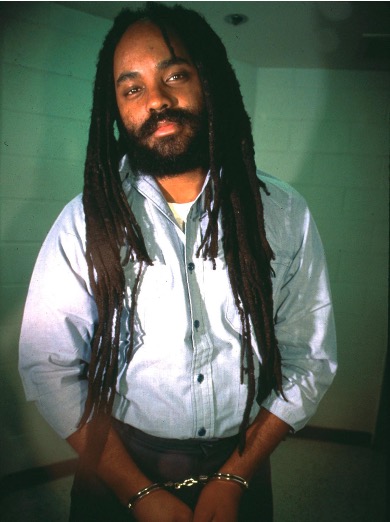
Mumia Abu-Jamal is the exception and the rule. He is a Black revolutionary framed by the government in a sham trial and sentenced to death. He is also one of the millions of victims of the American “justice” system which locks so many Black and oppressed people in prison.
Mumia joined the Philadelphia chapter of the Black Panther Party when he was a teenager in the late 1960s. Mumia has been fighting for the liberation of oppressed people ever since, telling their stories as a radio journalist in Philadelphia in the 1970s when police brutality was rampant. Mumia fought to uncover the truth when the Philadelphia police shot up a house of the revolutionary Black organization MOVE in 1978. One cop was killed in this incident, but the police bulldozed the house the next day, destroying the evidence. 9 members of MOVE were given long prison sentences in a sham trial. Another MOVE house was literally bombed by the police in 1985, killing 11 people inside and destroying a city block.
Mumia came to deeply respect the revolutionary principles of MOVE and supported the organization. Between that and his reporting on police brutality and other problems facing Black people in Philadelphia, the police hated him. When police officer Daniel Faulkner was shot and killed in 1981 and Mumia was found on the scene bleeding from a bullet wound, police, prosecutors, and a racist judge worked hand-in-hand to frame Mumia for Faulkner’s murder.
The Trial
In the early hours of December 9, 1981, Mumia pulled his cab over after a fare and saw his brother, also a cab driver, in an altercation with a cop. In what followed, Mumia was shot once and Faulkner was shot twice and died. Mumia has always maintained his innocence, witnesses came forward after the original trial saying they saw two men fleeing the scene after the shooting, and one man even confessed to the murder in 1999. But facts didn’t matter: Mumia was a Black man well-known as an outspoken critic of police brutality and a principled revolutionary since his teenage years. Police and prosecutors were determined to lock him up and kill him.
At Mumia’s 1982 trial for the murder of Faulkner, the prosecution’s case rested on a supposed confession by Mumia in the hospital after the shooting, Mumia’s gun being found at the crime scene, and eyewitness accounts of the shooting. At the trial, Judge Sabo, a notoriously racist judge who presided over more death sentences than perhaps any other judge at the time, refused to allow Mumia to represent himself and consistently favored the prosecution. Mumia’s court-appointed defense lawyer was unprepared, spent little time interviewing witnesses, and was denied the necessary funds to hire an investigator and expert witnesses. As a result, Mumia was convicted by a mostly white jury and sentenced to death, with Mumia’s political beliefs used against him during the penalty phase of the trial.
In the years since, a team of defense lawyers demonstrated flaws and outright frame-up in Mumia’s original trial. Mumia’s supposed confession was only heard by two cops and a hospital security guard, all of whom miraculously forgot to report it until months later. Doctors attending to Mumia did not hear a confession or any other words out of Mumia’s mouth, who was having difficulty breathing or staying conscious after being shot. One of the cops who claimed to have heard Mumia confess had written an initial report stating that Mumia said nothing; this cop was “on vacation” during Mumia’s trial, so the defense could not question him about this glaring contradiction.
Mumia owned a legally registered .38 caliber handgun and had it with him the night of the shooting; he worked nights as a cab driver and had it for his own protection. After the shooting, Mumia’s gun was not tested to see if it had been fired and Mumia’s hands were not tested for gunpowder residue; you would think the police would want to gather potential evidence…that is, unless they wanted to frame Mumia. The initial medical examiner’s report stated that the bullet pulled from Faulkner’s body was a .44 caliber, which could not have been fired from a .38 caliber handgun. At the trial, the medical examiner changed his story.
The police pressured three prostitutes to testify that Mumia had shot Faulkner. Pamela Jenkins refused to testify and later exposed the corrupt cop who had pressured her. Veronica Jones testified that the police pressured her to testify against Mumia, but Judge Sabo dutifully removed the jury during this testimony. Jones was threatened with prison time for pending charges, and when she did testify in front of the jury, she did not mention the police coercion. Cynthia White was the one prostitute who testified that Mumia was the shooter. Her original witness statement contradicted her trial testimony, and she was let off of numerous charges for years after Mumia’s trial by police and prosecutors. A fourth witness, Robert Chobert, was a cab driver with a suspended license and prior convictions whose original witness interview stated that the shooter ran away, but at trial he testified that Mumia was the shooter.
The Movement
After Mumia was sentenced to death, a protest movement emerged to stop Mumia’s execution and free him from Pennsylvania’s prisons. It started off as mostly “the reds and the dreads” (communists and the MOVE organization), but soon spread to include students, activists, religious leaders, actors, musicians, progressive politicians, and many others, even generating support internationally. Mumia’s eloquent critiques of prisons, police brutality, the justice system, and the crimes of American empire, written and recorded from inside a prison cell, became inspiring clarion calls to everyone outraged by injustice. Black people in Philadelphia cherished Mumia as the “voice of the voiceless,” and the authorities had to seriously worry about violent rebellion if they tried to kill Mumia.
As defense lawyers committed to justice rather than dollars gathered evidence and filed appeals, worldwide protests in the street made clear that Mumia’s case was a concentration of the struggle over the future of society. The conflict heated up, with the Fraternal Order of Police, whose leaders all look like extras from The Sopranos and always sound like they have the N-word on the tips of their tongues, vociferously campaigning for Mumia’s execution. The justice system, the power structure, and the most racist elements of American society were all stacked against Mumia. In spite of this, when Pennsylvania Governor Tom Ridge signed Mumia’s death warrant in 1995, the protests proved powerful enough to stop the execution.
What’s Happened Since
In 2001, a federal judge upheld Mumia’s conviction but vacated his death sentence. This ruling was upheld by the Third Circuit Court of Appeals, while the Supreme Court refused to hear Mumia’s case. In 2011, the Philadelphia district attorney’s office announced they would no longer seek the death penalty for Mumia. While Mumia is no longer under threat of execution, he still languishes in prison for life without parole, despite the police corruption and judicial misconduct that led to his conviction. The movement for Mumia has died down over the years, but Mumia has continued to speak out from inside prison, writing several books, defying persistent attempts by prison authorities to silence his voice.
Over the last several years, Mumia has developed serious health problems owing to the inhumane conditions inside American prisons. He has hepatitis C, diabetes, and liver cirrhosis. He contracted COVID-19, and, while he survived the virus, he had to have heart surgery for blocked coronary arteries in April 2021. Mumia has been denied proper medications for his health conditions and contact and treatment with his doctor. While the government failed to execute Mumia, they are now trying to kill him through neglect. It is urgent that we renew efforts to free Mumia Abu-Jamal from prison. We need this revolutionary out of a cell, inspiring people with his commitment to fighting injustice despite the grave consequences he has faced for his political views.
What you can do:
- Call and write the office of “progressive” Philadelphia District Attorney Larry Krasner – demand Mumia’s charges be dropped and to halt all prosecution of him. Demand he be immediately released so he can receive adequate healthcare.
215-686-8000 // larry.krasner@phila.gov
Philadelphia District Attorney, Three South Penn Square, Philadelphia, PA 19107-3499
- Host a screening of a movie about Mumia in your church, school, neighborhood or class. Contact Mass Action Defense to help organize
- Set up a book club of Mumia’s books
 Mass action defense